
Startup Branding: Why a Strong Brand Strategy Beats a Pretty Logo (Especially Early On)
As a designer, I love a stunning logo and a beautiful brand aesthetic. It grabs attention, makes you memorable, and feels… professional, right? But here’s a potentially controversial truth, especially for you ambitious startup founders: prioritizing a solid brand strategy – your Brand Playbook – in the early days will pay off far more than a fancy logo. Trust me, getting your strategic house in order first is the real secret to building a brand that lasts.
Clarity is King: Building Your Brand’s Foundation
Think of your Brand Playbook as your startup’s strategic blueprint. It forces you to nail down the crucial questions that define your very existence:
- What are your core values? (What truly drives you?)
- What problem are you really solving? (For whom, specifically?)
- What are your short-term and long-term goals? (Where are you headed?)
- Who is your ideal customer? (Beyond basic demographics – what are their needs, desires, and pain points?)
- How do you want your brand to be seen and remembered? (Your brand personality)
Without crystal-clear answers to these questions, even the most visually appealing logo and color scheme are just window dressing. They lack the substance and strategic direction to truly connect with your audience. It’s like putting a beautiful costume on a character who has no story. This brand strategy is the bedrock of all successful startup branding efforts.
More Than Just Looks: Building a Brand That Endures
The initial phase of any startup is about laying a sustainable foundation for growth. Your Brand Playbook acts as your North Star, guiding critical decisions across your entire business:
- Internal Culture & Hiring: Shared values and a clear brand identity attract the right talent and foster a cohesive team.
- Product Development: Understanding your target audience and brand promise ensures your product aligns with their needs.
- Customer Interactions: Consistent messaging and brand voice build trust and loyalty.
A stunning logo won’t help you make tough strategic calls, align your team, or ensure your product resonates with your customers. A strong brand strategy will. This is why focusing on your brand playbook for startups is paramount.
Prioritizing a solid brand strategy – your Brand Playbook – in the early days will pay off far more than a fancy logo.
Smart Spending: Prioritizing Resources for Growth
Let’s talk dollars and cents. Startups typically run lean. Sinking a significant chunk of your precious early capital into a professionally designed visual identity before you’ve solidified your brand’s core is a risky move. Think about it: those funds could be better used for:
- Developing your core product or service.
- Building a strong initial team.
- Launching targeted marketing campaigns based on a clear strategy.
Embracing a DIY approach to your initial logo and color palette allows you to strategically allocate your limited resources to the areas that will drive real growth and traction. This is a key aspect of smart resource allocation startup strategies.
The Power of Authenticity: Connecting with Early Adopters
Interestingly, in the early days, your authenticity can be a major asset. Early adopters often appreciate a sense of genuine connection and a focus on your core value.
A perfectly polished, but potentially hollow, visual identity system can feel less trustworthy than a slightly rough-around-the-edges DIY startup logo for your business when you clearly communicate your mission and values. Think of it as showing your true colors before adding the professional varnish. As you grow and learn, you’ll have the insights and resources to refine your visuals to match your now well-defined brand.
Flexibility is Key: Your Brand Will Grow and Change
Let’s face it: your initial understanding of your market and customers will likely evolve as you gain real-world experience. Locking yourself into an expensive, professionally designed visual identity too early can lead to a costly and time-consuming redesign down the road when your brand’s direction becomes clearer. A more adaptable, DIY visual approach in the beginning allows for easier tweaks and adjustments as you learn and grow. This is especially true in the early-stage branding of a startup.
The ‘why’ and the ‘how’ of your brand must always come before the ‘what it looks like.’
Setting Up for Success: A Playbook Makes for Powerful Design
Here’s the crucial takeaway: investing in your Brand Playbook first doesn’t mean you’ll never have great design. In fact, it sets you up for far better design down the line. When you eventually work with professional designers, they’ll have a crystal-clear understanding of your:
- Core values
- Brand personality
- Target audience
- Long-term goals
This strategic foundation will enable them to create a visual identity that truly reflects and reinforces your brand, making your investment much more effective in the long run.
For startups ready to work with a visual identity designer, having a solid brand strategy in place is the essential first step. Some of my startup clients, who are beyond the initial “proof of concept” phase and are committed to “doing this thing” with a strong foundation, often opt for a combined package of brand strategy and initial visual identity design. This ensures their visuals are strategically driven from the outset.
What Should Your Basic DIY Visual Identity Include?
If you’re in the “gotta do it myself phase”, this part is for you. Even with a DIY approach, there are a few key elements to consider for a functional initial brand mark:
- A Brand Mark: This could be an abstract symbol, an initial, or a simplified version of your company name.
- Horizontal and Vertical Logo Layouts: Having both options provides flexibility for different placements.
- Basic Color Palette: Choose a limited number of colors (2-3) that not only evoke the emotions your target audience will resonate with but are also ADA compliant to ensure accessibility.
- Font Selection: Pick no more than two fonts to use consistently across your basic materials, one for headings and one for body text.
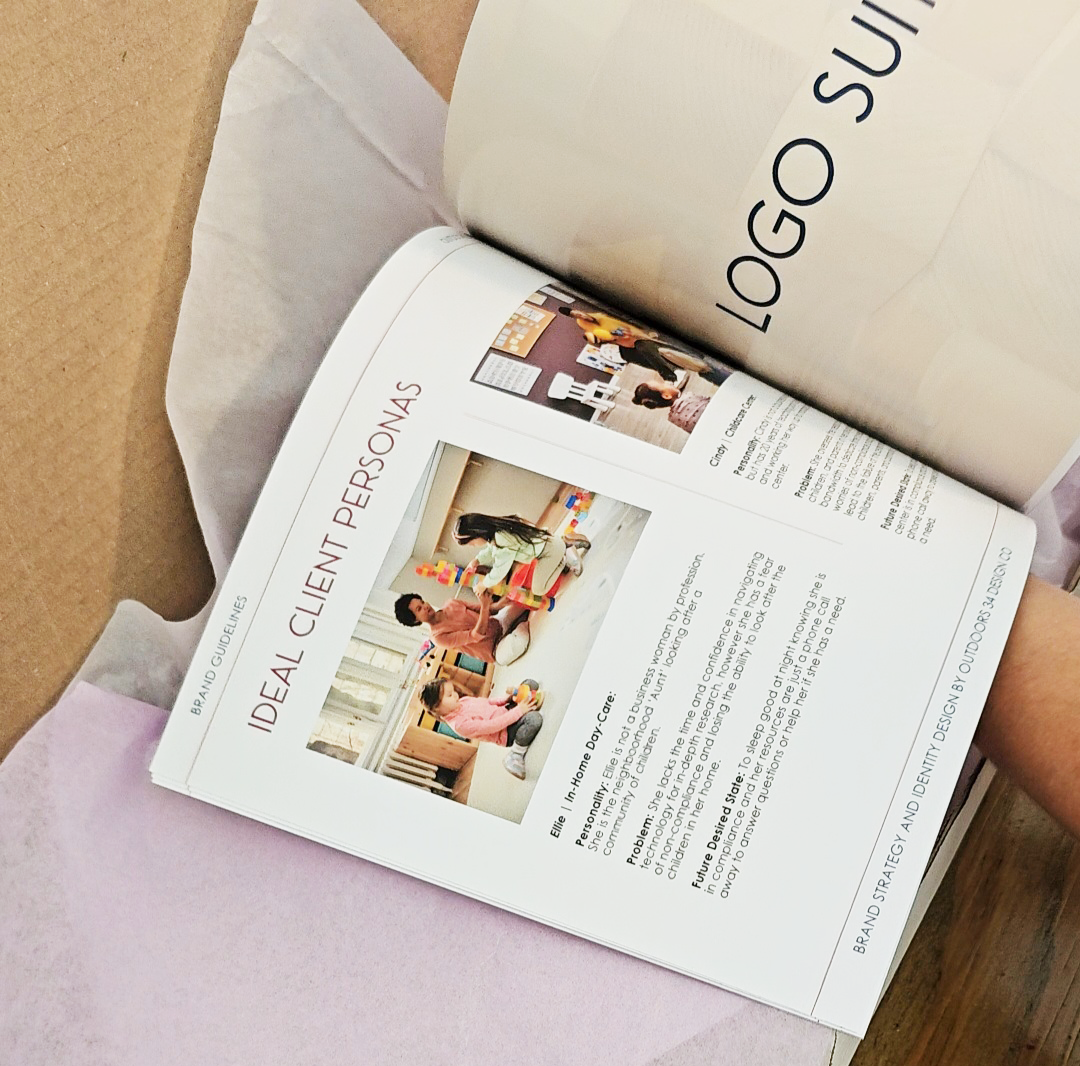
The Importance of a Brand Strategy Book (Brand Playbook)
A comprehensive Brand Strategy Book, often referred to as a Brand Playbook, goes beyond just these foundational questions.
It typically could include the following, but we always adjust to the brand’s specific needs for this ‘north star’ thesis document:
- Executive Summary: A brief overview of the brand strategy.
- Brand Vision and Mission: Your overarching aspirations and purpose.
- Target Audience Analysis: In-depth profiles of your ideal customers.
- Competitive Analysis: Understanding your market position and competitors’ strategies.
- Brand Positioning: How you differentiate yourself in the market.
- Brand Values and Personality: The core principles that guide your brand and its character.
- Brand Voice and Tone: How your brand communicates.
- Key Messaging: Core messages for different audiences and channels.
- Visual Identity Guidelines (even if basic initially): Rules for logo usage, color palette, and typography.
- Brand Experience Guidelines: How customers interact with your brand at every touchpoint.
- Measurement and Evaluation: How you will track the success of your brand strategy.
While a startup might not need this level of detail immediately, understanding the scope of a professional brand strategy book shows how this document really is ‘the north star’ for a brand. It’s literally what feeds your marketing based on data and foundational decisions.
Now, let’s be clear: having some basic visual identity is essential. But for startups navigating those crucial early stages, the time and resources dedicated to deeply understanding and articulating your brand strategy through a comprehensive Brand Playbook will deliver significantly greater long-term impact than rushing into a professionally polished aesthetic.
Remember, the ‘why’ and the ‘how’ of your brand must always come before the ‘what it looks like.’

Leave a Reply